Two exchanges. Roughly 140 billion dirhams in combined daily turnover on a busy week. A brokerage signup that takes under ten minutes. That's the gap most new investors in the Emirates run into: the onboarding is fast, but the decisions behind it aren't.
So here's what this piece does. It walks you through which market you'd actually be trading, what the regulator expects from your broker, and the concrete steps to go from curious to holding your first position. No cheerleading, just the mechanics.
What are the DFM and ADX, and which one should you care about?
The UAE runs two main equity exchanges. The Dubai Financial Market (DFM) and the Abu Dhabi Securities Exchange (ADX). They're separate venues with separate listings, and the stocks don't overlap the way a lot of newcomers assume. If you want exposure to banks, real estate developers, or utilities headquartered in Dubai, that's the DFM. If you're more interested in the large sovereign-linked industrials and Abu Dhabi's energy-adjacent names, that's the ADX.
In practice, plenty of retail investors hold both, which means your broker needs to give you access to both books from one login. That's the first practical filter I'd apply when comparing platforms, before fees even enter the picture. Both exchanges also run initial public offerings that retail investors can subscribe to directly, and both have expanded their derivatives and securities lending activity over the past few years.
The document layer nobody warns you about
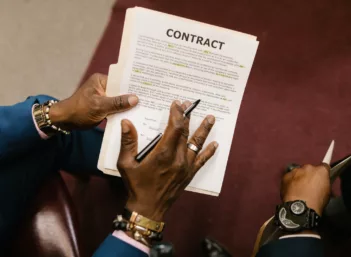
Opening an account sounds simple. It mostly is, but the paperwork is where people stall.
For a UAE resident, you'll typically need an Emirates ID or passport plus proof of address. Non-residents face a longer path.
The important thing isn't the exact checklist, it's knowing that verification is a regulated step, not a formality, so give yourself a couple of business days rather than assuming same-hour approval. Once you're through, funding options vary by platform. Local bank transfers clear fastest. International wires work but cost more and take longer.
Why the regulator matters more than the fee schedule
The Securities and Commodities Authority (SCA) is the federal regulator that licenses and supervises brokerage firms operating in the UAE. In 2024, the SCA reported that the number of licensed brokerage firms operating in the local market had grown past 100, up from 84 in 2023, reflecting a wave of new entrants competing for retail accounts, according to the Securities and Commodities Authority.
More choice is good, but it also means "licensed" isn't a differentiator anymore. Everyone licensed is licensed. What separates firms is custody arrangements, complaint handling, and whether client assets sit segregated from the firm's own books.
Ask your broker three questions before you deposit a dirham:
● Are client funds held in segregated accounts?
● Who is the custodian, and can I see the arrangement in writing?
● What's the complaint escalation path if a trade settles wrong?
A firm that answers all three without hesitation is a firm worth considering. One that deflects is not, no matter how slick the app looks.
How UAE market activity has grown
Retail participation in the region has climbed steadily, and the official numbers back that up. The DFM recorded 2.3 million trades in 2024, up from roughly 1.6 million in 2023, a jump the exchange attributed to broader retail participation and a heavier IPO calendar, per the Dubai Financial Market's 2024 annual trading data.
| Year | Trades on the DFM |
| 2023 | ~1.6 million |
| 2024 | 2.3 million |
What that tells you is that the retail crowd you'd be trading alongside isn't a fringe group anymore. It's the main audience the exchanges design products for. That's a good thing for liquidity, and a caution for anyone who thinks the IPO subscription button is a guaranteed allocation.
From signup to first trade: a practical checklist
- Pick the exchange you actually want first. Deciding DFM versus ADX narrows your broker shortlist fast. Start with online trading platforms that cover both, then compare.
- Confirm regulatory status. Check that the broker is licensed by the SCA before anything else.
- Verify the custody model. Segregated client accounts, in writing.
- Fund it. Start small, test the deposit and withdrawal loop once end-to-end.
- Place one small trade. Learn the order types (market, limit, stop) on an amount you'd be fine losing.
- Then scale. Only after the mechanics feel routine.
Step five is the one people skip. They fund, they buy something big, and they learn order types with real money on the line. Don't.
What you actually pay, and where it hides
Commission is the number everyone compares. It's also the least important one for a retail account placing a handful of trades a month. Spread, platform minimums, and any fallback or data fees tend to move the needle more, and they're usually buried two screens deep in the fee schedule. Two brokers can quote the same headline commission and deliver wildly different costs on the same trade. Pull the full schedule, and read the section labeled "other fees" first.
"Retail investors in emerging markets consistently underweight the total cost of ownership of a brokerage account, focusing on headline commissions while ignoring recurring fees that compound over years." That's the standing conclusion of the World Bank's 2022 Global Findex research on retail investment costs in emerging markets, which found that hidden recurring fees were a top-three complaint among first-time investors across surveyed markets.
What to watch after you start
Three things, in this order.
Liquidity. A stock that trades 200,000 dirhams a day will punish you on exit. Check average volume before entry, not after.
Corporate actions. Dividends, splits, rights issues. These don't announce themselves loudly, and missing one can quietly wreck your cost basis math.
Currency exposure. The dirham is pegged to the dollar, which simplifies things for UAE investors, but if you're funding from abroad, that peg cuts both ways.
None of this is exotic. It's just the stuff that only shows up after you've been in the market six months. The earlier you build the habit of checking these three before every trade, the fewer surprises you'll eat.
So where does that leave you? Pick the exchange, verify the license, read the full fee schedule, and place one deliberately small trade. Then decide whether you're a stock picker or a long-term accumulator. Most people who start in the UAE market never actually make that call, and it's why their portfolio drifts instead of building. Which kind of investor are you?